
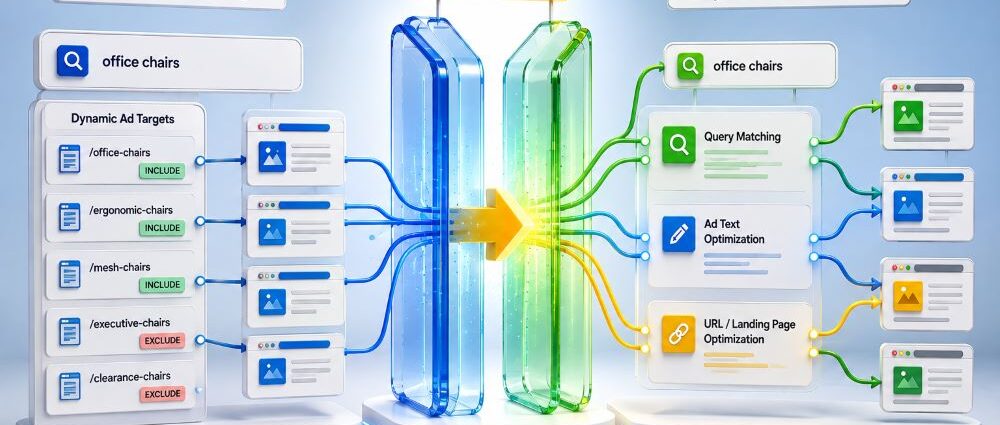
Google is moving Dynamic Search Ads toward AI Max, but the transition is easier to misunderstand than it should be. September 2026 matters for Google Ads automation, yet Dynamic Search Ads are not scheduled to disappear this month.
Google originally planned to begin the DSA sunset and automatic upgrade in September. It later extended that part of the transition to February 2027, while keeping the September 2026 schedule for Search campaigns using Automatically Created Assets and the campaign-level broad match setting.
Advertisers can still move from Dynamic Search Ads to AI Max voluntarily before then. The more useful question is not simply when Google forces the change, but what happens to targeting, ads, landing pages, and existing DSA controls once a campaign moves into the newer Search framework.
Dynamic Search Ads to AI Max Has Two Different Timelines
The easiest mistake is treating every Search automation change as part of one September migration. Google currently has two separate timelines, and the distinction matters for advertisers running DSA today.
| Timing | What changes |
|---|---|
| September 2026 | Eligible campaigns using Automatically Created Assets and campaign-level broad match begin moving into AI Max |
| February 2027 | Automatic upgrades from Dynamic Search Ads to AI Max are scheduled to begin |
There is no need to assume that every Dynamic Search Ads campaign will suddenly convert to AI Max in September. The broader direction is already clear, however: Google is bringing several older forms of Search automation under the AI Max framework.
AI Max has moved out of beta, and Search advertisers are already encountering it as part of normal campaign management. Google explains the revised timing and the split between the September changes and DSA migration in its AI Max migration announcement.
Why Google Is Moving Dynamic Search Ads Toward AI Max
Dynamic Search Ads were built to cover searches that a manually maintained keyword structure might miss. Google uses website content to match relevant queries, generate headlines, and select landing pages, which made DSA especially useful for large websites or inventories that change faster than keyword lists.
The problem DSA solves has not disappeared, but Google now wants to use more information when finding that extra demand. AI Max can combine signals from keywords, ads, landing pages, creative assets, and current search intent while keeping the activity inside an existing Search campaign.
Google presents AI Max as the newer Search optimization framework rather than another standalone campaign type. Our AI Max for Search campaigns article looks more closely at search term matching, text customization, Final URL expansion, brand controls, and reporting without treating AI Max as a replacement campaign type.
What Happens When You Upgrade DSA to AI Max
Google already provides a voluntary upgrade path inside Search campaign settings, so advertisers do not have to wait until February 2027. The migration changes campaign structure as well as the automation that Google uses to reach additional searches.
Dynamic Ad Groups Become Standard Ad Groups
A Dynamic ad group does not remain a separate DSA structure after the upgrade. Google converts it into a standard ad group inside the Search campaign, bringing the activity into the newer AI Max architecture.
AI Max therefore does more than place a new name on top of DSA. Compatible information and controls can carry forward, but the campaign no longer depends on Dynamic ad groups as its operating model.
Dynamic Search Ads Become Responsive Search Ads
Google also converts existing Dynamic Search Ads into Responsive Search Ads during the upgrade. Text customization can generate the minimum static assets required for the new ads while the campaign moves away from the old DSA format.
Google does not have to stop the old ads immediately. According to its DSA-to-AI-Max setup documentation, Dynamic Search Ads can continue serving while the replacement RSAs go through policy review, reducing the chance of a traffic gap during the transition.
Once the new ads become eligible, Google can pause the old DSAs and leave them available in a view-only state. Advertisers should still check the generated assets rather than assuming that a successful technical migration also preserves the exact messaging they previously approved.
Final URL Expansion Changes Landing-Page Selection
Dynamic Search Ads traditionally use website content and Dynamic Ad Targets to determine which pages can participate. AI Max approaches landing-page selection through a broader combination of search term matching and Final URL expansion.
Final URL expansion can send a user to another eligible page when Google predicts that the page better matches the search. Advertisers retain URL controls, but the logic is no longer identical to the classic DSA relationship between Dynamic Ad Targets and site content.
What Happens to Dynamic Ad Targets?
Legacy target rules deserve attention before an early upgrade because some do not map neatly into AI Max. Google says rules such as page title contains or page content contains can become read-only after migration.
Advertisers can remove those legacy rules later, but they may lose the ability to add or edit them after the upgrade. An account that has accumulated years of carefully constructed Dynamic Ad Targets therefore needs more preparation than a campaign that simply points DSA at most of the website.
Before migrating, check which targets still produce useful traffic and which ones merely remain in the account because nobody has touched them for years. An apparently minor targeting rule may still prevent paid traffic from reaching pages the business deliberately excluded.
AI Max Search Term Matching Is Not Just DSA With a New Name
Both systems try to reach relevant demand outside a rigid keyword list, but they do not discover that demand in the same way. Dynamic Search Ads rely heavily on website content to connect searches with suitable landing pages.
AI Max search term matching can use broad match and keywordless technology alongside existing keywords, ads, URLs, and other campaign signals. The website remains important, but it is no longer the only map Google uses to understand where additional Search demand might exist.
For mature Search accounts, that can uncover queries that a manual keyword structure or DSA setup did not capture well. It can also increase the amount of expansion advertisers need to inspect, especially in accounts where a cheap conversion and a good customer are two very different things.
What Control Do Advertisers Keep After the DSA Migration?
Moving toward AI Max does not remove every Search control. Advertisers can still use keywords, negatives, URL inclusions and exclusions, brand settings, search term reporting, and other familiar campaign controls while deciding how much automation to enable.
Search term matching, text customization, and Final URL expansion are related capabilities, but they represent different decisions inside the campaign. That gives advertisers room to test the newer framework without treating AI Max as one indivisible switch.
An early voluntary migration can therefore work well for accounts that want time to learn the new controls before the automatic transition arrives. Accounts with complex legacy targeting may have the opposite reason to wait: first document what the current DSA structure actually contributes.
Dynamic Search Ads vs AI Max Is Also a Reporting Change
DSA users will have to change how they diagnose performance. The old question was often which Dynamic Ad Target served, while AI Max analysis also needs to account for the query match, generated text, and landing page Google selected.
Google provides reporting for search terms, assets, keywords, and landing pages within the newer Search environment. Its AI Max reporting documentation gives advertisers more ways to inspect how those automated decisions contribute to campaign performance.
The shift does not necessarily make reporting worse, but old DSA habits will not transfer perfectly. When automation influences query matching, ad text, and URL selection together, diagnosing a weak conversion requires looking across all three rather than treating the page target as the entire explanation.
Should You Move From Dynamic Search Ads to AI Max Early?
Some accounts have good reasons to migrate now, while others are safer staying on DSA for a few more months. A simple DSA structure with reliable conversion tracking gives an advertiser more room to test AI Max before February and compare the results without deadline pressure.
Waiting can make sense when a campaign depends heavily on legacy Dynamic Ad Target rules, generates a large share of qualified leads, or is entering a critical sales period. Changing the structure simply because Google recommends an early migration is not the same as having a business reason to change it now.
Campaign size matters as well. A small DSA campaign used mainly to catch incremental long-tail searches is easier to experiment with than a campaign responsible for a substantial share of revenue.
What to Check Before Upgrading DSA to AI Max
The most useful preparation is identifying which parts of the current DSA setup actually affect performance. Review the landing pages DSA sends traffic to, valuable search terms, URL exclusions, Dynamic Ad Target rules, negative keywords, conversion actions, and any tracking setup that depends on the existing structure.
Lead-generation accounts should pay particular attention to what happens after the form submission. If AI Max expands into new searches and reported CPA falls, sales quality can still deteriorate, so qualified leads and downstream outcomes should remain part of the comparison.
Large ecommerce and content-heavy sites have a different risk. Final URL expansion is easier to trust when Google can choose from a clean collection of useful pages rather than thousands of discontinued products, thin filters, outdated offers, or URLs that should never receive paid traffic.
Does AI Max Replace the Need for Keywords?
The DSA migration does not turn every Search campaign into a keywordless campaign. Keywords can remain an important source of intent and structure, while AI Max search term matching expands beyond them when the advertiser enables that capability.
This also separates AI Max from Performance Max. PMax operates as a separate cross-channel campaign type, while AI Max changes how an existing Search campaign finds and serves demand; our AI Max vs Performance Max comparison covers that distinction in more detail.
Advertisers moving from DSA should therefore avoid thinking of AI Max as either “DSA 2.0” or a miniature PMax campaign. It borrows some of the discovery role DSA performed, but it places that role inside a broader Search optimization system.
When Is the Dynamic Search Ads Sunset?
February 2027 is now the date that matters for the automatic DSA transition. September 2026 still matters because Google has begun moving Automatically Created Assets and campaign-level broad match into AI Max, but Dynamic Search Ads have received several additional months.
That extra time is useful. Advertisers can benchmark the current DSA campaign, identify the targets and queries worth protecting, test AI Max deliberately, and compare business outcomes before Google starts the automatic upgrade process.
There is little benefit in waiting until the final migration window simply because the deadline moved. There is equally little reason to rush a valuable DSA campaign into AI Max without understanding which parts of the old setup still matter.
Use the months before February to run a controlled transition rather than a deadline-driven one. The useful test is not whether AI Max produces more traffic or more reported conversions, but whether its broader Search automation finds more of the customers the business actually wants.